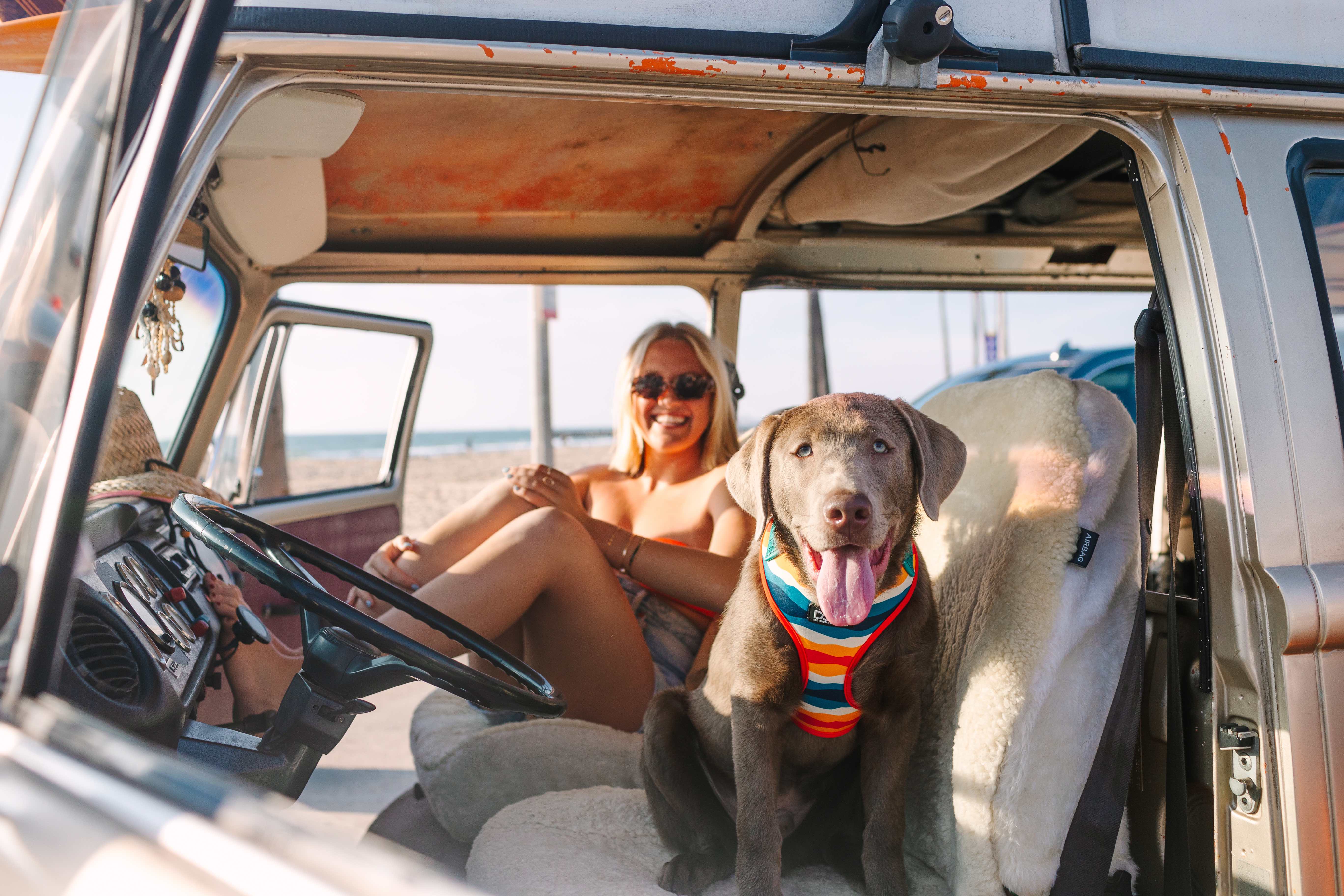



How to Restrain Your Dog in the Car
Most Aussie dog owners buckle up without thinking twice. But when it comes to the dog in the back seat, our 2025 survey found that 16% of dog owners don’t give it a second thought. Dogs climb onto seats or stick their heads out the window.
It can feel harmless at low speeds, but the risk escalates quickly on open roads and highways. A sudden stop or sharp turn can send an unrestrained dog forward in seconds, putting both the dog and passengers at risk of serious injury.
What’s often overlooked is that it’s not just a safety issue, it can also be a legal and financial one. In Australia, driving with an unrestrained dog can result in fines and penalties depending on the state, and if the situation is deemed to be causing distraction or unsafe driving, those penalties can increase further. In some cases, it can even contribute to demerit points or impact insurance claims if an incident occurs.
A few simple steps before leaving can prevent injury, avoid unnecessary fines, and protect everyone in the car. DOOG makes simple gear that helps keep focus on the dog, not on fumbling for gear.
Why Dog Car Safety Matters More Than Most Owners Realise
According to the RSPCA, approximately 5,000 dogs are injured or killed each year in Australia as a result of falling from moving vehicles.
In a crash, a loose dog becomes dangerous due to the force involved. A 15 kg dog can impact with over 450 kg of force, which can hurt the dog and people around it.
The risks don't stop there. A dog that climbs into the front seat, barks, or paws at the driver is a distraction, and on Australian roads, that's all it takes.
Dog Car Restraint Laws Every Australian Driver Needs to Know
Dog restraint laws vary across Australia. One rule applies everywhere: drivers must stay in control, and a loose dog can make that impossible.
A dog jumping around the cabin or blocking the rear view is not just dangerous, but it can land the driver with fines or demerit points on the spot.
Across Australia, drivers must maintain full control of the vehicle. A dog moving freely in a vehicle can distract the driver and cause an accident.
In NSW, driving with a dog on the lap can result in fines and demerit points. Similar rules apply in other states where driver distraction laws are enforced under road safety legislation.
Western Australia also requires dogs to be restrained to prevent distraction or obstruction of the driver.
Driving with a dog on the lap can lead to fines or penalties across Australia. Whether it's a quick run to the beach or a long weekend away, use a dog restraint every single time.
Choosing the Right Dog Car Restraint
No single dog restraint suits every dog. Size, behaviour and car type all matter. Some dogs are fine in a harness. Others need a crate. The right choice depends on the dog and the car.
Harness with Seatbelt Attachment
For most dogs, a well-fitted harness clipped into the seatbelt is the easiest and most practical option for everyday trips.
Always clip the restraint to the top/back of the harness, not a collar. In a sudden stop, a collar attachment puts serious pressure on the neck, something no dog owner wants.
A well-fitted harness allows two fingers of space between the fabric and the dog's body, clips into the seatbelt, and stays secure for the whole trip.
Keep the dog in the back seat, always. Front airbags can be fatal for a dog in even a minor bingle.
Travel Crate or Carrier
Some dogs just do better in a crate. If a dog gets anxious or carsick, having its own enclosed space can make a real difference on the road.
The crate must stay fixed in the car. It should not slide or tip. The dog must be able to stand, turn, and lie down with ease.
Large dogs travel best in a crate placed in the boot of an SUV or station wagon. Small dogs in a crate can travel in the rear passenger footwell, away from front airbags.
Cargo Barrier
Cargo barriers fit station wagons and 4WDs. Some are made for specific models; others are adjustable and easy to install and remove.
A barrier stops the dog from moving into the cabin. It does not protect the dog like a harness or crate. A harness with a barrier gives better protection on long trips and at higher speeds.
DOOG: Keep Your Mates Restrained on Every Trip

Here are some of the best car restraints and travel accessories:
-
Dog Car Seat (small, medium or large):Includes a seatbelt attachment that clicks securely into your car’s seatbelt socket. For extra height, opt for an extra Booster Pillow, for those pups who like a view! , helping keep your dog safely positioned and reducing movement during travel.
-
Car Seat Cover: Protect your car from muddy paws, fur, and odours with the DOOG Car Seat Cover, designed to fit most mid-to-full size cars and SUVs across the back seat or boot. Made from durable quilted fabric, it keeps your vehicle clean while keeping your dog comfortable. Featuring seat belt access, a mesh viewing screen, and door-protecting side panels, it’s the ideal solution for dog-friendly travel.
-
Car Restraint: Keep your dog safe and secure on the road with the DOOG Car Restraint, designed to clip onto your dog’s harness and click directly into your car’s seatbelt. Ideal for everyday travel, it helps keep your pup safely in place while you’re driving. Fully adjustable and easy to use, it’s a simple essential for stress-free trips with your dog.
DOOG's car travel range helps keep dogs secure and calm on every trip.
Tips for a Safer, Calmer Ride
Dogs take time to adjust to restraints. Start at home and let the dog wear or explore the harness or crate without pressure. Short sessions help before the first drive.
Australian summers are no joke. A parked car heats up fast; even on a mild day, temperatures inside can spike within minutes. Keep the car cool and never leave a dog alone in a parked vehicle.
On longer drives, pull over every couple of hours. Give the dog a chance to stretch, have a drink, and have a run around.
If the dog is panting heavily, pacing, or whining on every trip, it's worth a chat with the vet. Travel sickness and anxiety can be managed with help.
Gear That Goes the Distance
A quality dog restraint for a car starts with a harness that fits well. It should not rub or press into the chest or shoulders. The same harness can be used for walks and trips. One good harness covers both needs.
DOOG builds gear for Australian dogs and the people who take them everywhere, from beach runs to bush walks and everything in between.
Latest Blog